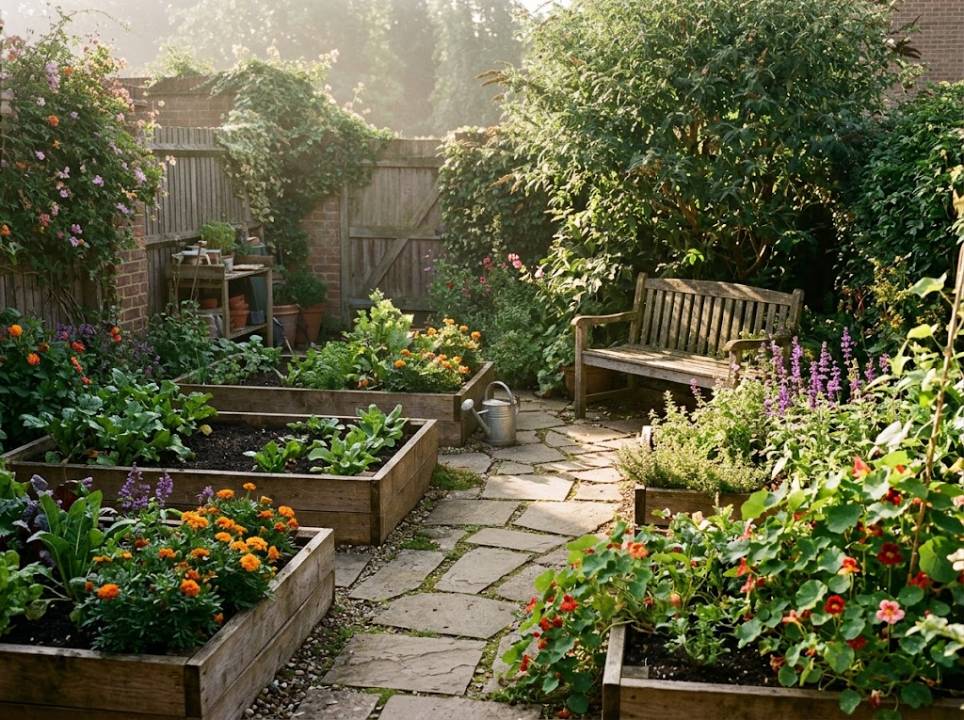
A small backyard can be a wonderful retreat when it is planned with care. With a few clever choices, even a narrow strip of ground can deliver flowers, fresh herbs and a quiet corner for coffee. These garden ideas focus on practical steps that suit beginners, from layout and planting to watering, lighting and seasonal care.
Start with a simple plan
A small backyard does not need a grand design. Sketch the space on paper, mark where the sun falls in the morning and afternoon, and note existing features such as walls, trees and drains. A simple plan keeps spending under control and prevents the common habit of buying plants that have nowhere sensible to go.
Use raised beds for tidy growing
Raised beds warm up quickly, drain well and keep soil from being trampled. A bed about one meter wide lets you reach the middle from either side. Fill it with a mix of compost and topsoil, and you will have a productive spot for vegetables, herbs or cut flowers within a single season.
Think vertical
When floor space is limited, grow upward. Trellises, wall planters and hanging baskets add greenery without eating into the path. Climbing beans, sweet peas and clematis cover fences quickly, and a vertical herb rack near the kitchen door puts fresh flavor within reach.
Choose plants that suit your climate
Local conditions matter more than trends. Check your hardiness zone, the soil type and how much rain you usually get. The Royal Horticultural Society offers detailed plant guides and seasonal advice that help beginners avoid expensive mistakes.
Create a seating corner
A garden you cannot sit in is only half a garden. Place a small bench or two chairs in the quietest corner, ideally with a view of your best planting. Add a pot of scented herbs nearby, and the space becomes a place where you actually want to spend your evenings.
Layer height and texture
Combine tall grasses at the back, medium perennials in the middle and low groundcovers at the front. Mix fine leaves with broad ones and glossy surfaces with soft ones. Layers make even a tiny plot feel deeper, and they give the eye something new to notice in every season.
Plan for a move abroad
Garden projects sometimes go hand in hand with relocation, for example when a family buys a house in the Netherlands. Local rules, plant names and supplier catalogs may all appear in Dutch, so professional Dutch translation services can be useful for contracts, permits and care instructions.
Handle paperwork for property
Buying or renting a home with a garden often involves authorizing someone to sign on your behalf. If you are in that situation, this guide to power of attorney translation explains how documents are prepared for use abroad.
Make use of containers
Pots let you grow almost anywhere, even on a balcony or a paved yard. Choose containers with drainage holes, use quality potting mix and group several pots together so they share moisture. Containers also make it easy to move plants to follow the sun or protect them from frost.
Water wisely
Deep, infrequent watering encourages strong roots, while daily sprinkling creates shallow ones. Water early in the morning to reduce evaporation, and collect rain from the roof in a barrel. A thick layer of mulch cuts watering needs by keeping moisture in the soil.
Welcome wildlife
Even a small plot can support bees, butterflies and birds. Add a shallow dish of water, leave a corner a little wild and include flowers with open centers that pollinators can reach. A few native plants usually bring more life than many exotic ones.
Add light for evenings
Solar lanterns and warm string lights extend the hours you can enjoy the space. Place lights low along paths and higher near seating, and avoid pointing them directly at windows. Soft, indirect lighting makes the garden feel calm and makes plants glow after sunset.
Compost your own soil
A small bin in the corner turns kitchen scraps and fallen leaves into rich compost. Alternate green material such as vegetable peelings with brown material such as dry leaves, and turn the heap now and then. In a year you will have free, nutritious soil for every bed.
Keep a seasonal rhythm
Divide tasks by season: sowing in spring, watering in summer, planting bulbs in autumn and pruning in winter. A simple calendar on the shed door helps you stay on track and prevents the common problem of rushing everything in one weekend.
Start small and expand
Resist the urge to plant everything at once. Begin with one bed and a few reliable plants, then add more as you learn what thrives. Gardening rewards patience, and each season teaches something that makes the next one easier.
Enjoy the process
A garden is never finished, and that is part of its charm. Take photos each month, share cuttings with neighbors and let the space change as your tastes do. The goal is not perfection but a small, living retreat that you enjoy using every day.
Protect plants from pests
Check leaves regularly and remove problems early. Companion planting, such as marigolds beside vegetables, can reduce some pests, and a simple jar of soapy water handles many small infestations. Healthy soil and good airflow prevent most disease before it starts and lower the need for sprays.