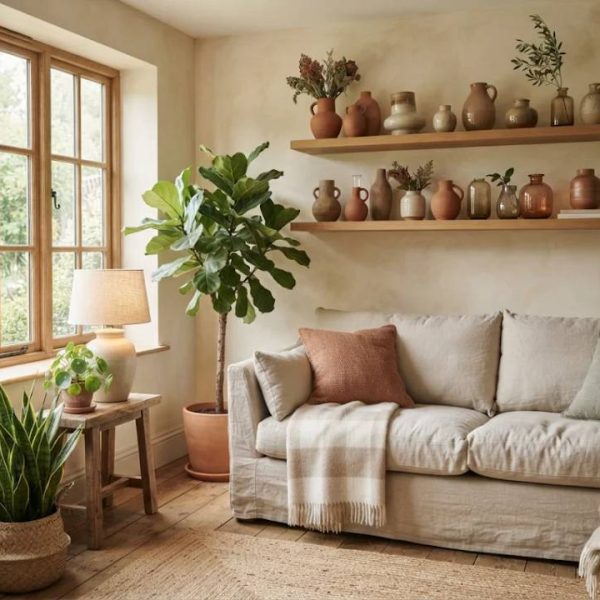
A home feels alive when it connects with the outdoors. You do not need a large garden to enjoy this connection. A windowsill of herbs, a basket of branches, a bench with plants beside it and a few natural materials can change the mood of a room. This article offers simple, affordable ways to bring the garden into your home decor, from choosing plants and containers to arranging light, color and texture. It also covers seasonal ideas, sourcing materials responsibly and the practical details that keep plants healthy indoors.
Start With the Light You Have
Every plant has light needs, and your rooms have their own. Observe windows through the day, and note which spots receive direct sun, bright indirect light or shade. Match plants to places: herbs and succulents like sun, ferns and peace lilies tolerate shade. The Royal Horticultural Society publishes plant guides that explain light, water and soil needs in simple terms.
Choose plants for the light you actually have, not for the picture you saw, because a healthy plant is always more decorative than a dying one.
Use Containers as Decor
Pots, baskets, jars and old tins give character. Choose a few materials, such as clay, wood and woven fiber, and repeat them across the room. Always provide drainage or use an inner pot, so roots do not sit in water. Group containers of different heights for a layered look.
Odd numbers of items usually look more natural than even ones.
Create Green Corners
A corner with a tall plant, a medium plant and a trailing plant on a shelf creates a small indoor garden. Add a lamp for warmth, a rug for softness and a chair for reading. Keep the arrangement simple, and avoid crowding paths.
Rotate plants every week so all sides receive light.
Bring Natural Materials Inside
Wood, stone, linen, wool and rattan echo the garden. Use a wooden bench as a plant stand, a stone tray for pebbles and moisture and linen cushions in garden colors such as sage, clay and cream. Dried flowers, grasses and branches last for months and need no care.
Collect materials responsibly, and never take plants or stones from protected areas.
Herbs and Edible Plants Indoors
Basil, mint, parsley, chives and thyme grow well on a bright windowsill. Harvest often to keep plants bushy, and water when the surface of the soil feels dry. Small tomato or chili plants can fruit indoors with enough light. Fresh herbs add flavor to meals and fragrance to the kitchen.
Label pots with names and dates to track growth.
Seasonal Changes
In spring, add bulbs such as tulips and hyacinths. In summer, open windows and place pots on a balcony. In autumn, use branches, berries and pumpkins. In winter, choose evergreen branches and indoor plants with glossy leaves. Changing a few elements each season keeps the home fresh without major spending.
Store decor in labeled boxes so it is easy to find next year.
Buying Plants and Decor From Abroad
Online shops offer unusual plants and handmade items from many countries. Check rules for importing plants, read product descriptions carefully and look for safety and labeling information. Our article on labeling and safety information rules describes why clear instructions and language matter for products sold across borders. Craft sellers in Turkey and other regions sometimes provide descriptions only in their local language, so turkish translation services can be useful for catalogs and orders.
Ask sellers about packaging, delivery times and care instructions before ordering.
Keeping Everything Healthy
Overwatering is the most common problem. Check the soil, use room temperature water and empty saucers after a few minutes. Wipe leaves to remove dust, feed plants lightly in the growing season and watch for pests. Isolate any new plant for two weeks before placing it with others.
Pets and children may be at risk from some plants, so check which species are safe.
Outdoor Spaces and Balconies
A small balcony can become a retreat with a few containers, a folding chair and string lights. Choose weather resistant materials and plants that tolerate wind and heat. Vertical shelves and hanging baskets save space, and a small table creates a place for morning coffee. Add a rug made for outdoor use to bring comfort and color, and use trellises for climbers that provide privacy and shade.
Water early in the day and check containers often during hot weather.
Decorating on a Budget
Start with cuttings from friends, secondhand pots and DIY projects. Paint old containers, sew simple covers and build shelves from reclaimed wood. Buy fewer, better pieces and care for them. Seasonal sales and local markets often offer plants at lower prices than large stores.
Patience and creativity matter more than expensive items.
Sustainable Choices
Choose peat-free soil, avoid single-use plastic, compost kitchen waste and collect rainwater for plants. Support local growers and swap plants with neighbors. Repair and reuse items instead of replacing them. A sustainable garden at home is kinder to the planet and often cheaper in the long run.
Small habits repeated over months have a big impact.
Lighting and Mood
Light changes the feel of a room more than most objects. Use warm bulbs in living areas, lamps at different heights and candles for evenings. Place mirrors opposite windows to bring daylight deeper into the room. Natural materials and soft light combine well with plants.
Avoid harsh overhead lighting when you want a relaxed atmosphere.
Color Palettes From the Garden
Sage green, terracotta, sand, soft yellow and deep blue are drawn from plants, soil and sky. Choose two main colors and one accent, and repeat them in pillows, pots and art. Painting one wall in a calm natural shade can transform a room.
Test samples in your light before committing.
Scents and Sounds
Herbs such as lavender, rosemary and mint give gentle fragrance. A small fountain or an open window with birdsong adds calm. Avoid heavy artificial scents that compete with natural ones.
Engage all the senses to make the home feel like a garden.
Pets, Children and Safety
Choose non-toxic plants, secure heavy pots and keep small decorations out of reach. Place hanging items where they cannot fall. Research each plant before buying.
Safety planning lets everyone enjoy greenery without worry.
Maintenance Routine
Set a weekly time for watering, cleaning leaves and removing dead stems. Check for pests, rotate pots and refresh soil once a year.
A short routine keeps the home looking fresh with little effort.
Starting Small
If a full makeover feels overwhelming, begin with one shelf, one windowsill or one corner. Add a plant, a candle and a natural material, and live with it for a week. Adjust as you learn what you enjoy.
Gradual changes feel personal and cost less.